

Real-Time Structural Intelligence for Critical Energy Infrastructure
Read the application note: AI-Driven Structural Monitoring for Pipelines
The Benefits of StructureIQ Monitoring
Onshore petroleum infrastructure operates under some of the most demanding structural conditions in the energy sector: thermal cycling from variable flow temperatures, external corrosion and coating degradation, vibration from pump stations and pressure surges, and ground movement or seismic loads that periodic manual inspection routinely misses. StructureIQ gives refinery, pipeline, and LNG terminal operators continuous, real-time visibility into impact, degradation, and seismic exposure, so problems are caught long before they become unplanned shutdowns.
- ✓ Pipeline integrity and vibration monitoring across pump stations, pipe supports, and crossing structures
- ✓ Seismic event characterization, and detection of the stiffness and frequency changes that ground movement causes
- ✓ LNG terminal structural health tracking for storage tank foundations and marine structures
- ✓ Refinery degradation monitoring for distillation towers, pressure vessels, and piping systems
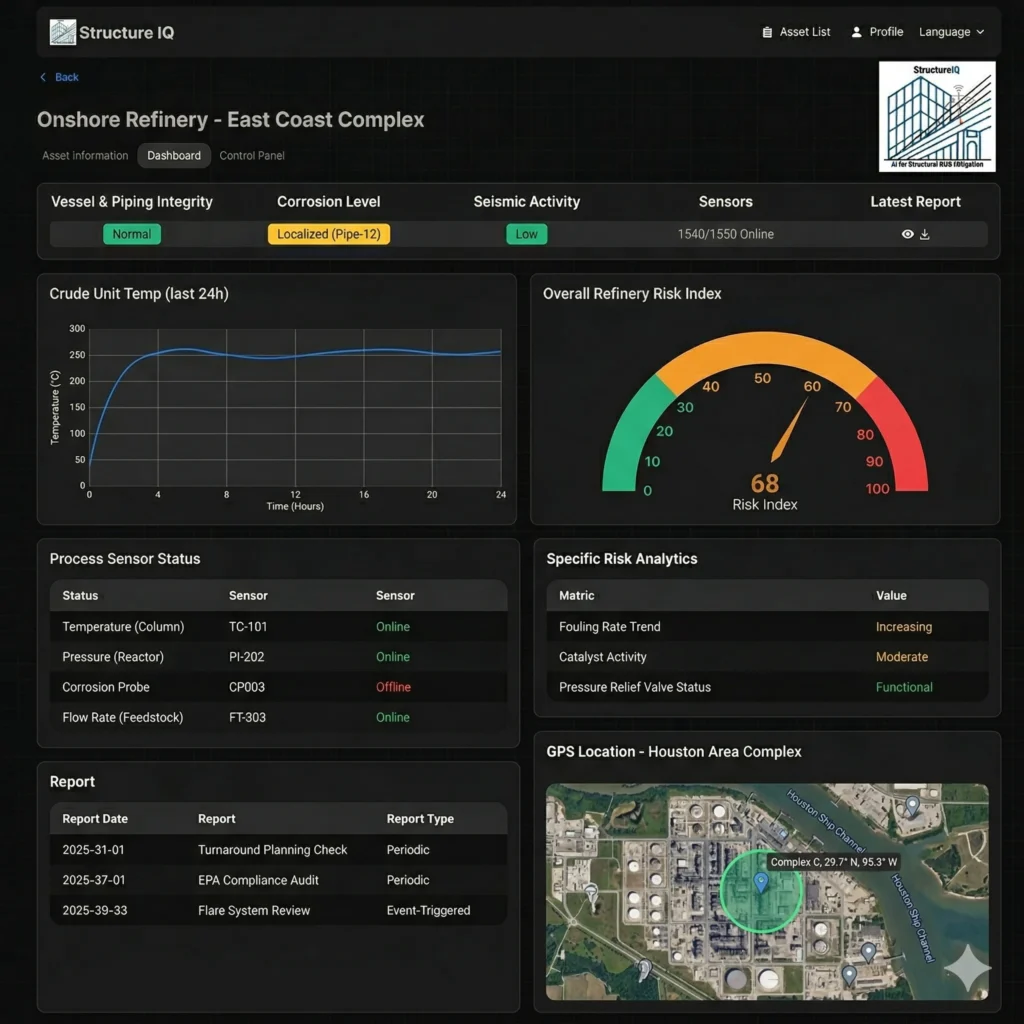
Sentinel AI Dashboard
Every monitored asset gets a live Structural Condition Index score, blending vibration, tilt, temperature, and impact readings into one clear health indicator that operators, maintenance teams, and asset managers can act on before a routine inspection would even catch the issue.
How it Works
StructureIQ deploys ruggedized, wireless Xnode sensors directly on the structures that keep energy infrastructure running: pump station foundations, above-ground pipe supports and rack systems, river and road crossing structures, tank farm and terminal foundations, distillation towers, pressure vessels, and valve and metering platforms. Each sensor measures vibration, tilt, temperature, and impact. Sensor data is sent over a secure, low-power cellular uplink to the Sentinel AI platform, which filters and analyzes it in the cloud, so there is no invasive or costly cabling across the facility.
In the StructureIQ Data Cloud, this data is normalized and analyzed to separate routine operating noise from genuine structural anomalies, producing a Structural Condition Index (SCI), a 0–100 score per asset, along with real-time alerts to the Sentinel AI dashboard. Instead of waiting on a scheduled inspection or reacting after a shutdown, engineers, maintenance crews, and asset managers get the intelligence to predict and prevent failures, including rapid, data-backed assessments after seismic events, ground movement, or third-party impacts.