
For insurers
Structural condition data for underwriting, risk engineering and claims.
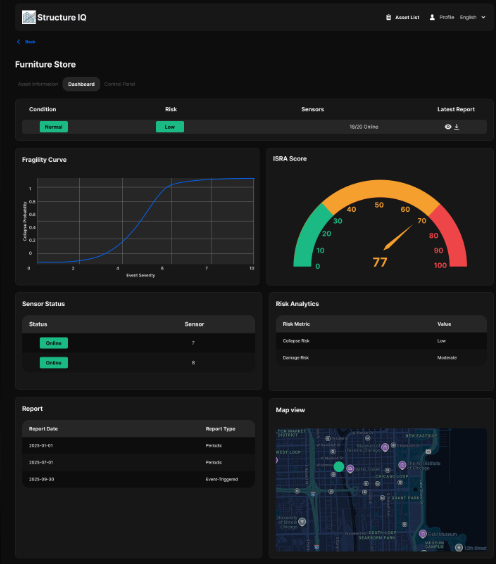
COPE data tells you how a building was built. The Structural Condition Index tells you what condition it is in, continuously, from submission through claims.
The gap in today’s submission data
Adverse selection
Deterioration hides inside class averages, so the worst risks look like the rest at bind.
Mispriced risk
Premiums follow construction class, not the condition of the individual structure.
Claims disputes
Without a pre-loss baseline, separating event damage from existing damage is slow and costly.
Across the policy life cycle
Submission and bind
A baseline condition report per location supports risk selection, credits and debits, and tailored terms.
In force
Deterioration alerts trigger engineering referral. Portfolio roll-ups show accumulation by peril and condition.
After an event
An immediate exceedance alert, then a full structural engineering event report within 24 hours.
Claims
Time-stamped before-and-after data separates existing from event-caused damage.
Case study
IKEA Mexico City
After the magnitude 7.7 Michoacán earthquake in September 2022, building managers had automated alerts within minutes and a structural analysis within hours. The analysis found no structural damage, and the store stayed open. The deployment was validated alongside a global insurer.
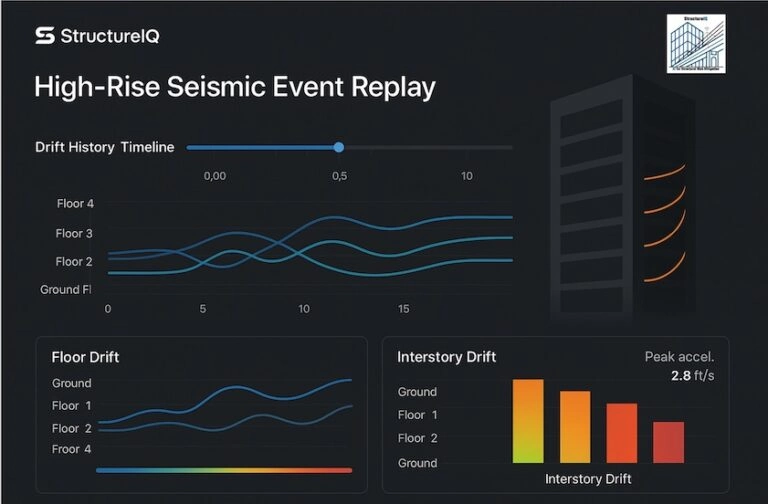
Portfolio view
Every insured location ranked by SCI, with drill-down to asset history.
Fits your systems
An API delivers the SCI and alerts into underwriting and risk platforms.
Security reviews
Data processing terms and hosting options to support carrier IT and security review.
Start with a structured pilot
A defined group of insured locations, success criteria agreed up front, and a decision date. We install, monitor and report; your team judges the result against the criteria.